Birthday Traditions in South Korea: Celebrating a 60th Birthday with Meaning and Style
Learn how families may celebrate a 60th birthday, or hwangap, in South Korea, with examples of family gatherings, respectful gestures, symbolic foods, and modern party ideas.
On this page
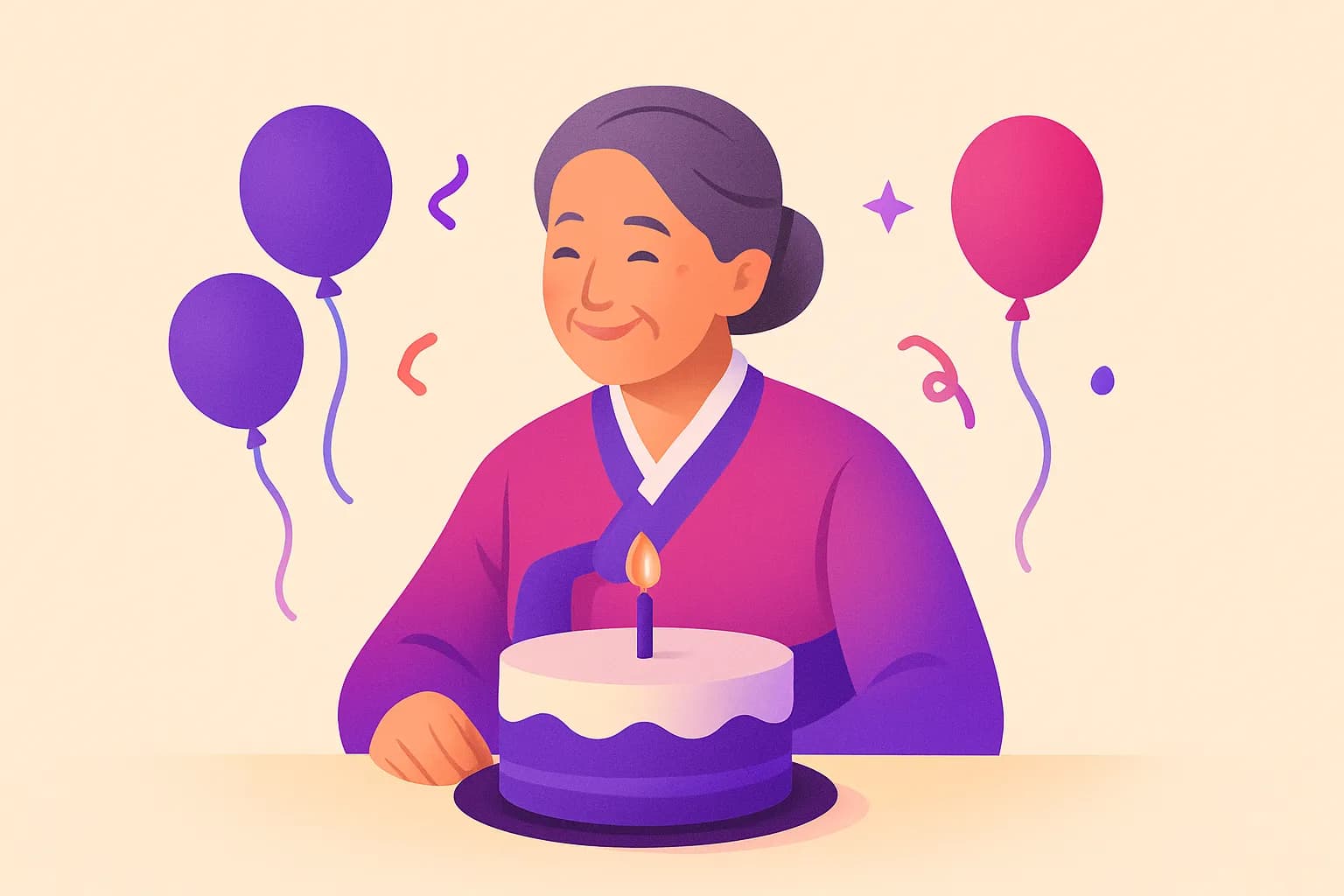
In South Korea, a 60th birthday, often called hwangap, can be a meaningful family milestone. Some families mark it with a gathering, respectful gestures, symbolic foods, and gifts for the celebrant, while others keep it simple or celebrate in more modern ways.
Why the 60th Birthday Is So Important in South Korea
The 60th birthday, or hwangap (환갑), is often described as the completion of a 60-year cycle in the traditional zodiac system. For some families, that makes it a meaningful occasion to honor the celebrant’s life and role in the family. Today, celebrations vary widely, from formal family events to smaller restaurant meals or trips.
Main Traditions and Rituals for a South Korean 60th Birthday
South Korean 60th birthday celebrations can blend family events, respectful rituals, and personal preferences. Examples include:
- Family Gathering: A large banquet or party brings together children, grandchildren, relatives, and close friends. The atmosphere is festive and filled with appreciation.
- Traditional Dress: The celebrant often wears a hanbok, a colorful traditional Korean outfit, adding dignity and beauty to the occasion.
- Ritual Bowing: Younger family members perform deep bows (jeol) to honor the celebrant, expressing gratitude and filial piety.
- Special Foods: Some families include dishes such as miyeok-guk (seaweed soup), tteok (rice cakes), and fruit displays. The menu often depends on family preference and venue.
- Photos and Blessings: Family members share stories, offer speeches, and take commemorative photos to preserve the moment.
While some families hold a solemn ceremony, others opt for a modern party at a restaurant or event hall. It’s common for children to organize and host the event, reflecting their love and respect.
Key Symbols and Their Meanings
Some decorations and foods may carry symbolic meaning for the family. Common examples include:
- Red and Blue Colors: These colors may appear in clothing or decorations, depending on the family’s style and the event design.
- Tteok (Rice Cakes): Rice cakes are a common celebratory food and may be included for tradition, presentation, or family preference.
- Fruits: Fruit displays are often used as part of the table setting and can add a formal, abundant look to the celebration.
- Seaweed Soup: Seaweed soup is associated with birthdays in Korea and may be served at some celebrations.
- Cranes and Pine Trees: These motifs may appear in decorations or cake designs for a traditional feel.
Not every hwangap celebration uses the same symbols or rituals, so it helps to ask the family what matters most to them.
Planning a Memorable 60th Birthday: Step-by-Step
If you’re preparing a hwangap party, here’s a practical guide for a celebration that’s both traditional and personal:
- Confirm the Date: Some families may choose a date based on family preference or a traditional calendar. If you already know the month and day you plan to use, the Birthday Countdown tool can count down to the next occurrence of that month and day. For lunar-calendar planning, confirm the date with the family first.
- Choose the Venue: Options range from home banquets to upscale restaurants or event halls. Consider the guest list and the celebrant’s preferences.
- Select the Hanbok: Traditional attire adds a meaningful touch. Many rental shops offer beautiful hanbok for elders.
- Plan the Menu: Include symbolic dishes, and consult elders for favorite foods. Caterers familiar with Korean traditions can help.
- Organize Rituals: Prepare a simple bowing ceremony and encourage children and grandchildren to participate.
- Prepare Speeches and Blessings: Invite family to share memories, gratitude, or wishes. If you want help drafting a message, try the Birthday Wish Generator for editable birthday text.
- Order a Special Cake: Choose designs with cranes or pine trees, or go with a modern twist that still honors tradition.
- Gift Giving: Some families give gifts such as gold jewelry, cash, health-related products, or personalized photo albums. The best choice depends on the celebrant and family preferences.
Modern vs. Traditional: How Hwangap Is Evolving
While the core values of honoring elders remain, hwangap celebrations have adapted to contemporary lifestyles. Here’s a quick comparison:
- More traditional approaches: A home banquet, hanbok, formal bows, or other family-led rituals.
- More modern approaches: Restaurant parties, family trips, studio photos, or other personalized plans.
Some families even skip the party and take a multigenerational trip to create new memories. The flexibility allows each family to tailor the celebration to their values, schedule, and budget, blending time-honored customs with personal touches.
Tips for Guests: Etiquette and What to Expect
- Dress Respectfully: Business casual or semi-formal attire is typical. If in doubt, ask the host about the dress code.
- Bring a Gift: A cash envelope may be appropriate in some families, while others may prefer a practical or sentimental gift. If you are unsure, ask the host.
- Participate in Rituals: Follow the lead during bowing ceremonies or toasts, even if you’re not Korean.
- Address the Celebrant Properly: Use respectful language and titles; a simple “Saengil chukha hamnida” (Happy Birthday) is always welcome.
- Share Good Wishes: Prepare a heartfelt message or memory. The Birthday Wish Generator can help you draft a message to edit.
Honoring Other Major Milestones: A Brief Comparison
- Dol (1st Birthday): Marked by a grand celebration and the famous doljabi fortune-telling ritual.
- Baek-il (100th Day): Celebrated for babies who reach 100 days of age, symbolizing survival and health.
- 70th Birthday: Some families also choose to celebrate later milestone birthdays, with the style varying by family.
- 80th and 90th Birthdays: These may also be marked with family gatherings or smaller celebrations.
Each milestone can have its own customs, and the importance of each one varies by family.
Helpful Tools for Your Celebration
Staying organized makes any milestone birthday less stressful. Use the Age Calculator to see age in calendar years, months, and days based on a birth date, and use the Birthday Countdown to track the next occurrence of a month and day. For more tips, check out the Birthday Hunter guides hub. The Birthday Hunter website is a separate directory.
Frequently Asked Questions
What is the meaning of 'hwangap' in Korean birthday traditions?
Hwangap (환갑) refers to a 60th birthday and is often linked to the completion of a 60-year zodiac cycle. For some families, it is a meaningful occasion marked with a gathering, respectful gestures, and gifts.
What should I bring to a South Korean 60th birthday party?
A cash gift may be appropriate in some families, often given respectfully with both hands. Other options can include jewelry, fruit, or a thoughtful personal gift. If you are unsure, ask the host what would be suitable.
Is the 60th birthday still celebrated in modern South Korea?
Yes, but the style has evolved. While some families maintain traditional home banquets, many now celebrate at restaurants or with travel. The focus remains on honoring the celebrant’s life and family role, but the format is more flexible and tailored to personal preferences.
How do I calculate the exact age for a hwangap celebration?
If you want to check someone's age from their birth date, you can use the Age Calculator. It shows calendar age based on the birth date entered. If your family is using a specific traditional or lunar-calendar date for the celebration, confirm that timing separately.
Try it for yourself
Age Calculator
Your exact age in years, months and days: plus weeks, hours and more.
Calculate my ageBirthday Countdown
Count down to your next birthday: live, to the second.
Start my countdownBirthday freebies for you
Checking current offers...
Plan your birthdayGet actual free stuff on your birthday
Find restaurant and store birthday rewards with Birthday Hunter. Check eligibility and save the ones you want to use.
Get Birthday Hunter: freeRelated guides
Birthday Traditions in South Korea: How Families Celebrate 60th Birthdays with Meaning and Style
5 min read
Culture & TraditionsBirthday Traditions in South Korea: How to Celebrate a 60th Birthday in Style
6 min read
Culture & TraditionsUnique Birthday Traditions in South Korea: How Families Celebrate 60th Birthdays in Style
7 min read