Birthday Traditions in South Korea: How to Celebrate a 60th Birthday in Style
Discover the rich traditions behind South Korea’s 60th birthday, with step-by-step tips for a meaningful, memorable celebration.
On this page
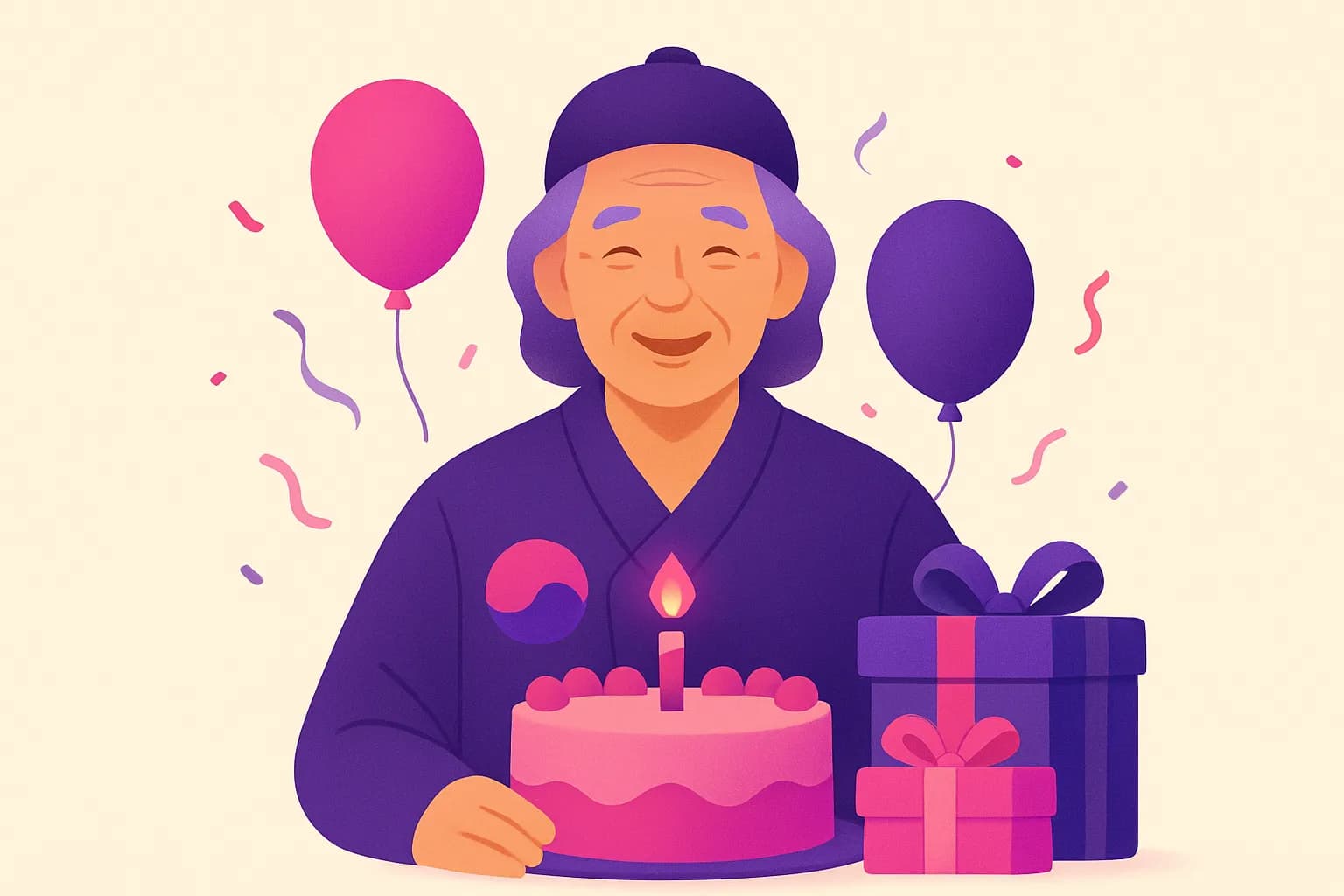
In South Korea, a 60th birthday, often called hwangap, can be an important family milestone. Celebrations may include a shared meal, honoring the older family member, respectful bows, special clothing, and personal tributes that mark the occasion in a meaningful way.
Understanding Hwangap: The Significance of Turning 60
In Korean culture, the 60th birthday, known as hwangap (환갑), is widely recognized as a major milestone. Traditionally, it is associated with completing a 60-year calendar cycle, so many families treat it as a moment for reflection, gratitude, and reunion with loved ones.
Today, hwangap remains meaningful for many families, although the scale and style of the celebration can vary. It may be a chance to honor an older family member and express hopes for continued happiness and good health.
Key Elements of a Traditional Korean 60th Birthday
While celebrations vary by family, hwangap may include several traditional elements:
- Family Gathering: Extended relatives and close friends gather to honor the celebrant.
- Respectful Bows (Jeol): Children and grandchildren bow deeply to show respect and gratitude.
- Hanbok Presentation: The birthday person often receives and wears a hanbok (traditional Korean clothing), symbolizing dignity and festivity.
- Shared Feast: Families may host a special meal at home, in a restaurant, or in a banquet space.
- Rice Cakes: Tteok or other rice cakes may be displayed and shared as part of the celebration.
- Blessing Toasts and Words: Family members offer well-wishes, toasts, and sometimes read letters expressing love and thanks.
- Gift Giving: Practical gifts or money are common, but heartfelt gestures and words are equally important.
Step-by-Step: How to Host a Memorable Hwangap Celebration
1. Set the Date and Guest List
Choose a date close to the actual birthday, but convenient for extended family. Traditionally, it’s a family-centric gathering, but many now invite friends and colleagues as well.
2. Plan the Venue and Atmosphere
- At Home: For a warm, intimate vibe, host the party in the celebrant’s home.
- Banquet Hall or Restaurant: Larger gatherings often opt for a professional venue, especially in urban areas.
- Decor: Family photos, a special table for the honoree, and favorite colors or meaningful details can help set the mood.
3. Organize the Traditional Rituals
- Welcoming: Greet the honoree with bows and applause.
- Hanbok Ceremony: Help the celebrant don the hanbok, often in front of the gathered guests.
- Formal Bows (Jeol): Children and grandchildren perform a deep bow (jeol) to the birthday person, often accompanied by a short speech or letter of thanks.
- Words of Blessing: Encourage family members to share stories or well-wishes. For inspiration, try the birthday wish generator for a draft message you can edit for a milestone celebration.
4. Prepare the Feast
Food is central. Key dishes often include:
- Seaweed Soup (Miyeokguk): A familiar birthday dish in many Korean families.
- Baekseolgi (Steamed White Rice Cake): A simple rice cake option sometimes included on the table.
- Assorted Tteok (Rice Cakes): Different styles can add variety to the meal or dessert table.
- Galbi (Grilled Short Ribs): A celebratory favorite.
- Fruit Towers and Dessert Displays: Fruit platters or dessert displays can add color and variety.
Set the main table (sang) with the rice cake tower at the center, flanked by fruit, meats, and side dishes. Guests are invited to eat and share blessings.
5. Give Thoughtful Gifts
Money in an envelope is one possible gift, and modern families may also choose photo albums, practical items, or experience gifts such as travel. A handwritten letter or family video montage can add a personal touch.
6. Capture the Moment
Don’t forget to take group photos. You can use a birthday countdown to count down to the next birthday date, then create an album to commemorate the event.
Modern Twists on Hwangap: Blending Old and New
Today’s hwangap celebrations can be as traditional or as contemporary as you wish. Here are some ways families are updating the tradition:
- Travel Celebrations: Some families treat the honoree to a family trip within Korea or abroad.
- Charitable Giving: Making a donation in the celebrant’s name to mark the milestone.
- Photo Slideshows: Sharing a digital presentation of the honoree’s life highlights.
- Themed Parties: Incorporating elements from the celebrant’s favorite hobbies or eras.
- Virtual Gatherings: For families living abroad, video calls allow everyone to participate.
Whatever the approach, many families keep the focus on honoring the celebrant and spending time together.
Traditional vs. Modern: A Quick Comparison
- Venue: Traditional: home or banquet hall; Modern: restaurants, hotels, or even vacation destinations.
- Clothing: Traditional hanbok; Modern: formal suits or dresses, sometimes hanbok for photos only.
- Gifts: Traditional or common choices may include money, clothing, or food; modern options can include experiences, technology, or other practical presents.
- Rituals: Traditional bows, rice cake rituals; Modern: video tributes, travel, or charity events.
- Food: Some celebrations focus on familiar Korean dishes, while others mix in the honoree’s favorite foods or restaurant menu items.
Tips for a Meaningful 60th Birthday Celebration
- Respect the Honoree’s Preferences: Some may prefer a quiet dinner over a big party. Ask what would make them happiest.
- Honor Tradition, But Personalize: Blend symbolic rituals with personal touches, such as a favorite song or video montage.
- Get the Generations Involved: Include children in the bows and meal prep. Multigenerational participation makes the day special.
- Plan Ahead: Confirm the honoree’s birth date, choose a convenient date for guests, and send invitations early. If you want a simple date-based age breakdown, you can use an age calculator.
- Document the Day: Capture stories, photos, and wishes for a keepsake album or video.
For more inspiration on birthday planning and traditions around the world, explore our guides hub.
Frequently Asked Questions
What is the meaning of hwangap in Korean culture?
Hwangap is a 60th birthday celebration associated with completing a traditional 60-year calendar cycle. Many families see it as an important milestone and use it as an occasion for gratitude, respect, and gathering together.
Do people still celebrate hwangap in modern Korea?
Yes. Some families still hold larger gatherings with formal elements, while others prefer a smaller meal, a trip, or another personal way to mark the birthday.
What should I wear or bring to a Korean 60th birthday party?
Dress respectfully: business casual or formal is appropriate. If you’re close family, you may be invited to wear hanbok. Gifts of money in an envelope are traditional, but thoughtful presents or a heartfelt message are always appreciated.
How can I make a 60th birthday truly special for my parent or grandparent?
Combine family traditions with personal touches: organize a meal with favorite foods, prepare a slideshow or video, write a letter of appreciation, and invite loved ones to share stories. For help drafting a message, try the birthday wish generator or explore more planning ideas on the Birthday Hunter guides hub.
Try it for yourself
Age Calculator
Your exact age in years, months and days: plus weeks, hours and more.
Calculate my ageBirthday Countdown
Count down to your next birthday: live, to the second.
Start my countdownBirthday freebies for you
Checking current offers...
Plan your birthdayGet actual free stuff on your birthday
Find restaurant and store birthday rewards with Birthday Hunter. Check eligibility and save the ones you want to use.
Get Birthday Hunter: freeRelated guides
Birthday Traditions in South Korea: How Families Celebrate 60th Birthdays with Meaning and Style
5 min read
Culture & TraditionsUnique Birthday Traditions in South Korea: How Families Celebrate 60th Birthdays in Style
7 min read
Culture & TraditionsUnique Birthday Traditions in South Korea: How to Celebrate a 60th Birthday in Style
6 min read