Unique Birthday Traditions in South Korea: How Families Celebrate 60th Birthdays in Style
Discover the unique South Korean birthday traditions for 60th birthdays: why this milestone matters, how families celebrate, and how you can join in.
On this page
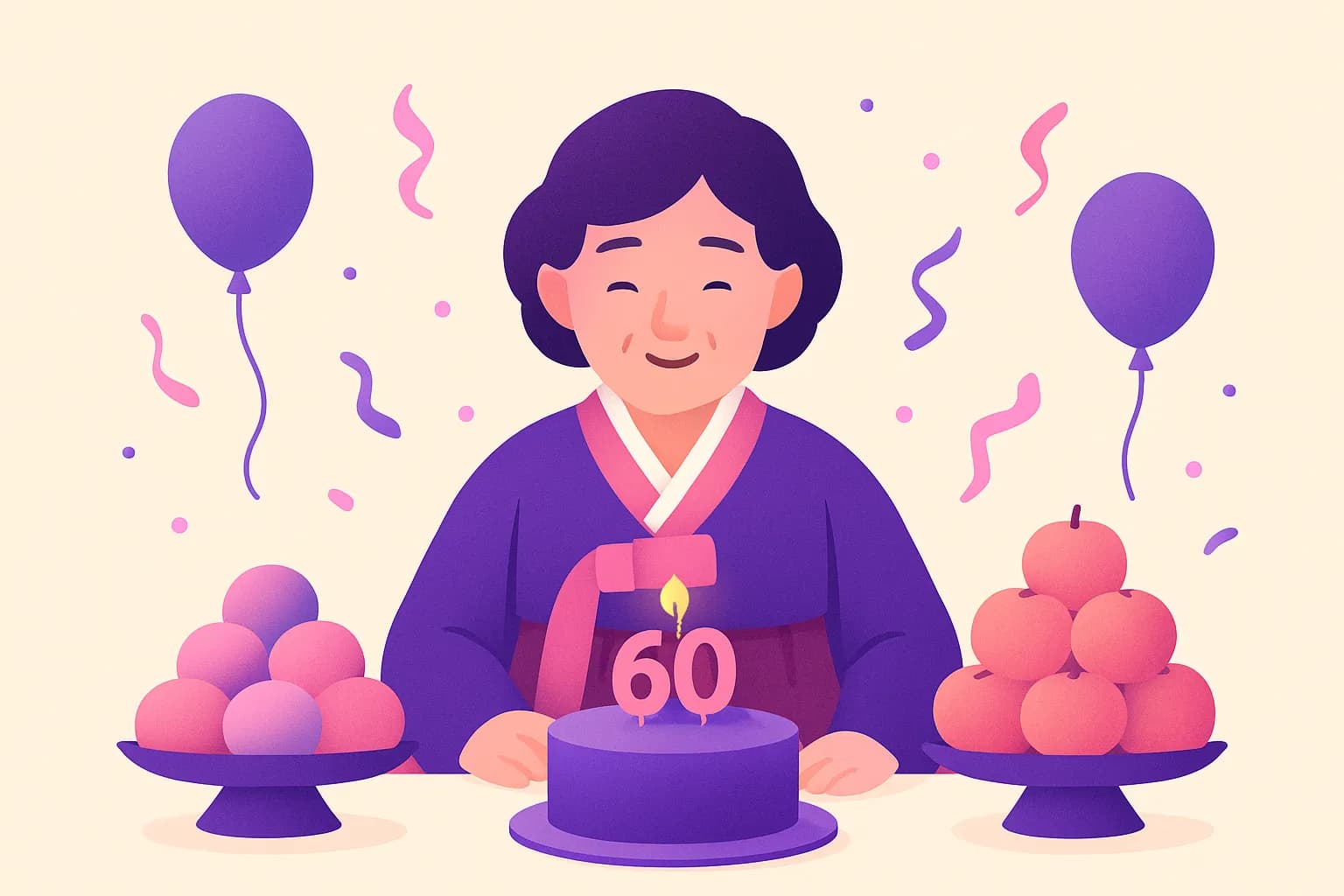
In South Korea, a 60th birthday, often called hwangap, can be a major family milestone tied to the completion of a traditional 60-year cycle. Celebrations vary by family, but they may include large gatherings, formal gestures of respect, special foods, and gifts that honor the celebrant and their place in the family.
Why 60th Birthdays Are So Important in South Korea
The 60th birthday, or hwangap (환갑), is widely recognized as an important milestone in Korean culture. It is tied to the completion of a traditional 60-year cycle, combining the 12 zodiac animals with repeating elemental associations. Reaching 60 is often treated as a meaningful turning point and a chance to celebrate health, family, and good fortune.
Beyond the individual birthday, hwangap can also be a family-centered occasion. Children and grandchildren may use it to thank and honor elders, reflecting values of respect and care within the family. Today, some families keep traditional elements, while others prefer a simpler or more contemporary celebration.
How Families Celebrate a 60th Birthday in Korea
Some South Korean 60th birthdays are large affairs, while others are more modest. Customs vary by family and region, but these are examples of traditions that may appear:
- Large Family Banquet: Extended family: sometimes even friends and neighbors: gather for a feast, often held in a restaurant, banquet hall, or the family’s home. The scale can range from intimate to lavish, depending on means and preferences.
- Ceremonial Table: Some families prepare a beautifully arranged table with foods such as rice cakes, fruit, fish, and wine. The exact meaning and form can vary by family, and not every celebration includes ancestor-related rites.
- Dressing in Hanbok: The birthday honoree often wears hanbok, Korea’s traditional attire, to emphasize the importance of the occasion.
- Bow of Respect (jeol): Children and grandchildren perform a deep bow to the elder, expressing gratitude and respect. Sometimes, the birthday person bows to the family to show humility.
- Photo Sessions: Commemorative photos are a must, often with the entire family in formal or traditional clothing.
Step-by-Step: A Typical 60th Birthday Celebration
- Preparation: Family members organize the guest list and venue. Invitations may be formal or word-of-mouth, depending on the family style.
- Setting the Table: Special care is taken to arrange the ceremonial table with symbolic dishes and decorations.
- Arrival and Greetings: Guests arrive and offer congratulations, often with a bow or handshake.
- Formal Ceremony: The family performs bows, gives speeches, and presents gifts to the honoree.
- Feasting and Toasting: The meal begins, sometimes featuring foods such as baekseolgi (steamed rice cake), soups, noodle dishes, or meat dishes chosen by the family. Toasts and well-wishes may be shared.
- Entertainment: Singing, games, or even hired performers may follow, depending on the family’s preferences.
- Group Photos & Farewell: Everyone gathers for photos before the celebration winds down.
Traditional Foods and Their Meanings
Foods at a Korean 60th birthday can carry symbolic meaning, but the menu varies by family and venue. These are common examples:
- Baekseolgi (White Rice Cake): Signifies purity and a fresh start for the next cycle of life.
- Miyeok-guk (Seaweed Soup): A familiar birthday food in Korea that many families associate with care, nourishment, and birthday tradition.
- Fruit Display: Apples, pears, persimmons, and other fruit may be arranged decoratively as a festive centerpiece.
- Fish: Some families serve whole fish as part of a formal meal or ceremonial table.
- Alcohol (Soju or Rice Wine): In some celebrations, alcohol is used for toasts or included in a formal table setting.
Some formal tables use color and arrangement in intentional ways, though the exact symbolism and presentation differ by family.
Modern Twists on the 60th Birthday Tradition
While many families honor traditional customs, others celebrate turning 60 in more contemporary ways. Examples include:
- Travel Celebrations: Some families send the birthday person on a special trip, either domestically or abroad, as a reward for a life well-lived.
- Charitable Giving: Instead of lavish parties, some honorees choose to donate to charity, reflecting gratitude for their own good fortune.
- Small Gatherings: As family sizes shrink, intimate celebrations with only close relatives are increasingly common.
- Modern Venues: Hotels, cruise ships, and even cafes are popular venues for stylish, contemporary birthday banquets.
- Personalized Gifts: Thoughtful presents such as photo albums, custom jewelry, handwritten letters, or a family slideshow can help make the milestone memorable.
How to Honor a Korean 60th Birthday: Do’s and Don’ts
- Do: Use polite language and follow the family’s lead on forms of address and greetings.
- Do: Bring a thoughtful gift if gifts are expected. Depending on the family, this might be cash in an envelope, food, flowers, or something personal.
- Do: Participate in the bowing ceremony if invited, even as a guest. It’s a sign of respect.
- Don’t: Assume every family follows the same gift symbolism. If you are unsure, ask a close relative or host what would be appropriate.
- Don’t: Arrive noticeably late if the event includes a meal, ceremony, or scheduled photo session.
- Don’t: Address elders by their first name.
If you’re unsure what to say in a card or message, you can use the Birthday Hunter birthday wish generator for inspiration tailored to milestone birthdays.
Comparison: 60th Birthday Traditions in Korea vs. the West
- Scale: Korean 60th birthday celebrations are often treated as major family milestones, while birthday customs in Western countries vary widely by family and region.
- Family Focus: Korean 60th birthday celebrations are often family-centered and may include multiple generations. In many Western settings, parties can be more informal or friend-focused, though this also varies widely.
- Ceremony: Some Korean celebrations include bows, formal speeches, or a ceremonial table. These elements are less typical in many Western birthday parties, which may be more casual.
- Symbolism: A Korean 60th birthday is often framed around respect, family, and the meaning of completing a 60-year cycle. Other birthday traditions may emphasize different themes, depending on the family.
- Gifting: Korean families may choose practical gifts, cash, or keepsakes, while gift styles in other places also depend on family preference and the tone of the celebration.
If you want a simple age breakdown in calendar years, months, and days, try the Birthday Hunter age calculator. It does not calculate Korean age systems.
Planning a 60th Birthday: Practical Tips
If you’re organizing a Korean-style 60th birthday, here’s a checklist to keep things smooth and meaningful:
- Discuss expectations with the honoree: traditional, modern, or a mix?
- Book a venue early, especially if inviting extended family.
- Prepare or order traditional foods in advance.
- Arrange for hanbok rental or purchase if desired.
- Organize a schedule for speeches, bowing, and photo-taking.
- Consider a simple birthday countdown so relatives know how many days remain until the celebration.
- Make space for personal touches, like a memory wall or family slideshow.
For more birthday planning guides, browse the Birthday Hunter guides hub.
Frequently Asked Questions
What does hwangap mean in Korean birthday traditions?
Hwangap refers to the 60th birthday, marking the completion of a traditional 60-year cycle. Many families view it as an important life milestone and celebrate it with gatherings, special foods, and gestures of gratitude and respect.
Is the 60th birthday still as important in modern South Korea?
For many families, yes. Others choose smaller or more contemporary celebrations instead of a large banquet or formal ceremony. The importance of the occasion can depend on the family’s preferences, budget, and traditions.
What should I give as a gift for a Korean 60th birthday?
A suitable gift depends on the family and the style of the event. Cash in an envelope may be welcome in some families, while others may prefer food, flowers, keepsakes, or something personal. If you are unsure, ask the host. For message ideas, try the Birthday Hunter wish generator to draft a note to edit and personalize.
Can non-Koreans participate in a 60th birthday celebration?
Often, yes, if they have been invited. A respectful approach is to follow the host’s lead, dress appropriately for the setting, and join formal elements only if invited. If you need a simple age calculation in years, months, and days, the Birthday Hunter age calculator can help, but it does not calculate Korean age systems. For more birthday planning ideas, see the Birthday Hunter guides hub.
Try it for yourself
Age Calculator
Your exact age in years, months and days: plus weeks, hours and more.
Calculate my ageBirthday Countdown
Count down to your next birthday: live, to the second.
Start my countdownBirthday freebies for you
Checking current offers...
Plan your birthdayGet actual free stuff on your birthday
Find restaurant and store birthday rewards with Birthday Hunter. Check eligibility and save the ones you want to use.
Get Birthday Hunter: freeRelated guides
Birthday Traditions in South Korea: How Families Celebrate 60th Birthdays with Meaning and Style
5 min read
Culture & TraditionsUnique Birthday Traditions in South Korea: How to Celebrate a 60th Birthday in Style
6 min read
Culture & TraditionsBirthday Traditions in South Korea: How to Celebrate a 60th Birthday in Style
6 min read