Birthday Traditions in Japan: How Families Celebrate and Modern Twists to Try
Discover Japanese birthday traditions, from family celebrations to unique modern twists, plus tips for creating a memorable birthday in Japan.
On this page
Birthday traditions in Japan are a blend of subtle family gatherings, thoughtful gestures, and new Western-inspired customs. While historically birthdays were not individually celebrated, modern Japanese families increasingly mark the occasion with cakes, parties, and creative traditions—often adding their own unique twists. Here’s how birthdays are celebrated in Japan today, and ideas for mixing tradition with modern flair.
How Japanese Families Traditionally Celebrate Birthdays
Unlike in many Western cultures, individual birthdays were not always a big event in Japan. Traditionally, people celebrated their aging together on New Year’s Day, a custom called kazoe-doshi ("counted years"). Personal birthdays were mostly reserved for special milestones, especially for children.
Historic Milestone Birthdays
- Shichi-Go-San (7-5-3): Celebrated on November 15 for girls aged 3 and 7, and boys aged 3 and 5. Children dress in kimono and visit shrines for blessings.
- Kanreki (60th birthday): Symbolizes a return to the zodiac sign of your birth. Marked with red clothing and festive family gatherings.
- Koki (70), Kiju (77), Sanju (80), Beiju (88), Sotsuju (90), and more: Each has its own name and symbolic meaning, celebrated with relatives and gifts.
Family Gatherings and Gifts
For everyday birthdays, family celebrations tend to be understated. Parents may prepare a favorite meal or a special dessert, and give practical or meaningful gifts. It’s typical for families to keep the celebration small and focused on togetherness rather than lavish parties.
The Rise of Western-Style Birthday Celebrations
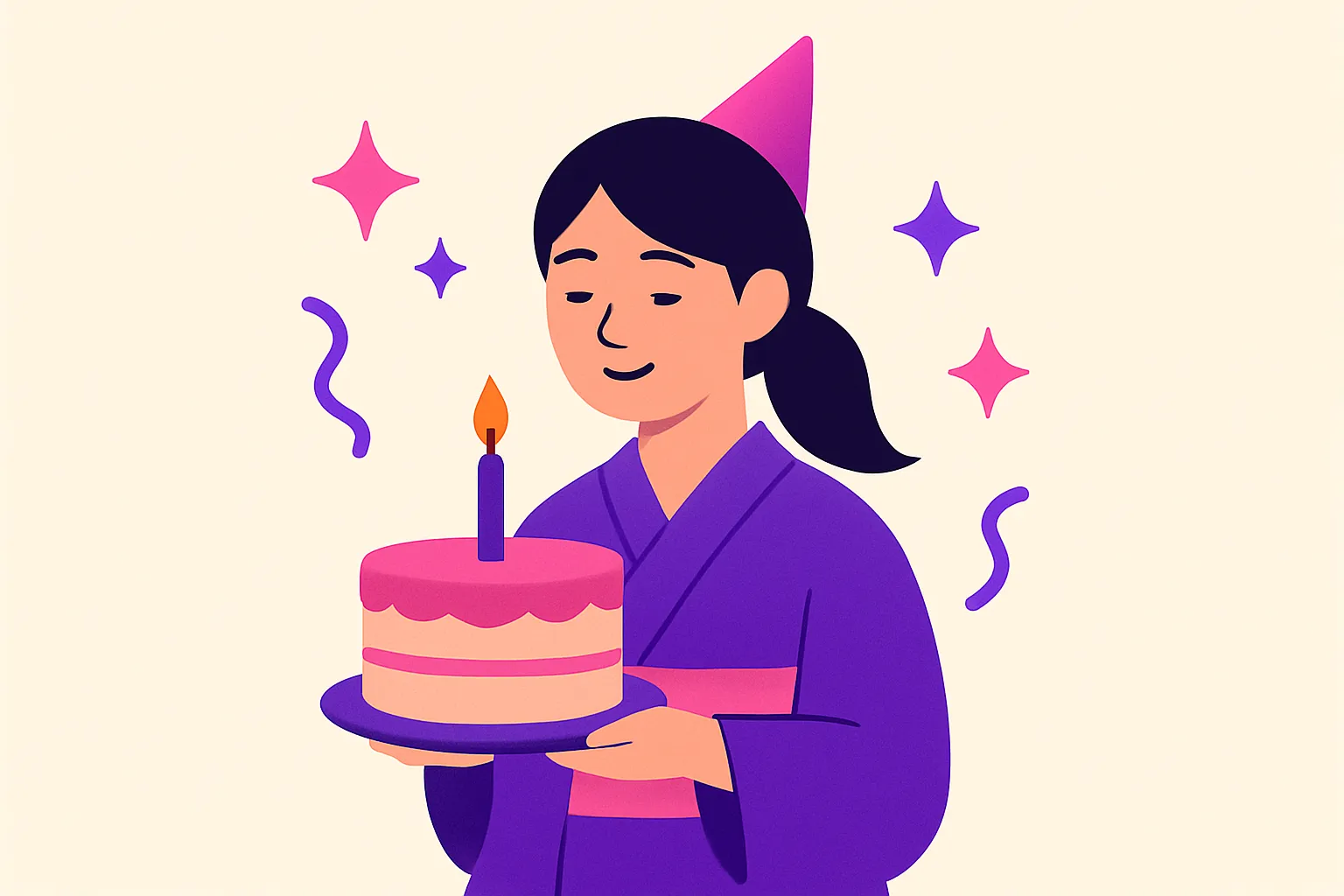
In recent decades, Western customs have influenced Japanese birthday traditions, especially for children. Birthday cakes, party hats, and candles are now common in many households.
Birthday Cakes: A Sweet New Custom
The Japanese birthday cake of choice is usually a light sponge cake layered with whipped cream and strawberries, known as "strawberry shortcake". Candles are lit and blown out after singing “Happy Birthday” (often in English). Local bakeries even offer personalized cakes with names and ages written in chocolate.
Children’s Parties and Modern Activities
- Home Parties: Games, decorations, and small gifts for friends are becoming more popular, especially among preschool and elementary-age kids.
- Karaoke: Teens and adults might celebrate at a karaoke box with friends.
- Restaurant Gatherings: Dining out at family restaurants or themed cafes is a modern favorite.
To plan your own party, try the birthday countdown tool to build excitement or the age calculator to mark big milestones like Kanreki or Beiju.
Unique Japanese Birthday Traditions to Know
Japan’s blend of old and new means you’ll find birthday traditions with a distinct local flavor:
- Personalized Letters: Handwritten notes expressing gratitude are common, especially from children to parents or vice versa.
- Omiyage (Gifts): Thoughtful, beautifully wrapped presents are valued over expensive or flashy gifts.
- Character Goods: For kids, gifts featuring favorite anime or manga characters are a go-to.
- Surprise Celebrations: Friends may organize a surprise party at home, school, or work.
- Group Gifts: In the workplace, it’s typical for coworkers to pool money for a single present.
Regional Variations
Some areas have their own spins, such as the Okinawan custom of celebrating the 97th birthday with a large community party, or unique cake flavors available only in certain prefectures.
Modern Twists: New Ways to Celebrate
Looking to blend tradition with creativity? Here are some modern twists Japanese families are trying:
- Theme Parties: From Pokémon to Studio Ghibli, character-themed décor makes celebrations memorable.
- Photo Booths: "Purikura" photo sticker booths are a hit with teens and provide instant keepsakes.
- Virtual Celebrations: With friends and family spread out, video calls and online party games are on the rise.
- Experience Gifts: Tickets to events, lessons, or activity vouchers are popular, especially for adults.
- DIY Bento: Making and decorating a special lunchbox together is a hands-on family activity.
Sample Birthday Message in Japanese
Want to wish someone a happy birthday in Japanese? Try:
- お誕生日おめでとうございます! (O-tanjoubi omedetou gozaimasu!) – "Happy Birthday!" (polite)
- おめでとう! (Omedetou!) – "Congrats!" (casual, for friends)
Stuck for ideas? The birthday wish generator can help craft the perfect message.
Tips for Celebrating a Birthday in Japan
- Keep It Thoughtful: Focus on meaning over extravagance. Personal touches—like homemade cards or a favorite meal—go a long way.
- Respect the Recipient: Consider their wishes; some Japanese people, especially older generations, may prefer a low-key celebration.
- Gift Giving Etiquette: Wrap gifts nicely, avoid anything in sets of four (unlucky number), and present with both hands.
- Include Everyone: If celebrating at home, involve family members in the planning and festivities.
- Embrace Modern Fun: Don’t be afraid to add karaoke, themed games, or digital touches to your party.
Comparing Japanese Birthday Traditions with Western Customs
| Japan | Western Countries |
|---|---|
| Traditionally low-key, family-focused | Often larger gatherings, especially for children |
| Focus on milestone ages (3, 5, 7, 60, 88, etc.) | Annual celebrations for every age |
| Emphasis on handwritten messages and practical gifts | Common to give toys, experiences, or money |
| Personalized cakes (strawberry shortcake popular) | Wide variety of cake styles and flavors |
| Modern influence from Western traditions growing | Some families now adopt Japanese character themes |
Frequently Asked Questions
Do Japanese people celebrate birthdays every year?
Yes, but it’s a relatively recent development. While traditional celebrations focused on group aging and major milestones, most Japanese families now mark individual birthdays annually, especially for children. However, the scale and style can vary—from a quiet meal at home to a themed party with friends.
What are common birthday gifts in Japan?
Popular gifts include character goods for children, stationery, sweets, practical items, or experience gifts for adults. Presentation matters: gifts are often beautifully wrapped, and handwritten notes add a personal touch. For group celebrations (like at work), pooling money for a single present is common.
Are there any superstitions or taboos around Japanese birthdays?
Yes. Avoid giving gifts in sets of four (the number 4, "shi," sounds like death), and steer clear of sharp objects or items associated with funerals. Red is auspicious for milestone birthdays like Kanreki (60), but otherwise, choose subtle, tasteful colors. Always present gifts with both hands and offer a polite birthday greeting.
What’s the best way to plan a Japanese-style birthday for someone?
Start by considering the recipient’s preferences. Plan a thoughtful meal or cake, include a handwritten card, and offer a meaningful (not flashy) gift. For a modern touch, try a themed party, karaoke, or a digital element like a birthday countdown. For more ideas, explore the Birthday Hunter guides hub. The Birthday Hunter app can also help you keep track of birthdays and plan meaningful celebrations.
Get actual free stuff on your birthday
Birthday Hunter finds free birthday food, drinks and deals near you — and rewards you for claiming them.
Get Birthday Hunter — freeRelated guides
Creative Long-Distance Birthday Celebration Ideas That Make Your Mom Feel Special
7 min read
CultureThe Origin and Meaning of Birthday Superstitions: Why Some Cultures Avoid Celebrating on Friday the 13th
5 min read
Party IdeasHow to Celebrate a Long-Distance Birthday for Your Best Friend: 7 Creative Ideas That Bridge the Miles
7 min read