Birthday Traditions in South Korea: Unique Ways to Celebrate a 60th Birthday
Explore the rich, meaningful 60th birthday traditions in South Korea: from grand parties to symbolic seaweed soup: and how to celebrate authentically.
On this page
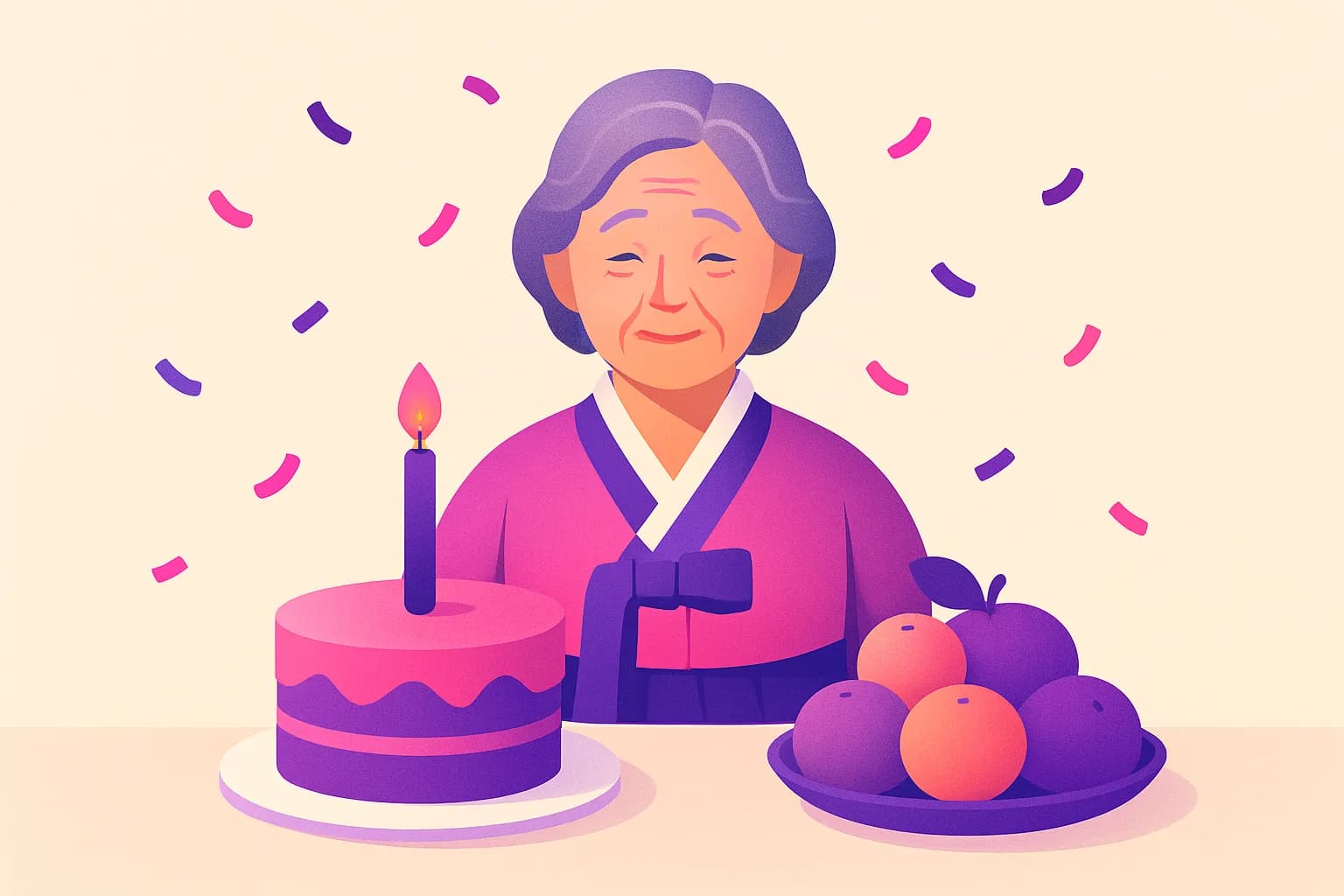
In South Korea, a 60th birthday, or hwangap, can be a major family milestone. Some families mark it with a gathering, traditional clothing, symbolic foods, and messages of respect for the elder being celebrated.
Why the 60th Birthday Is So Important in South Korea
The 60th birthday, called hwangap (환갑), is a meaningful milestone in Korean culture. Traditionally, reaching 60 marked the completion of one full sexagenary cycle, a repeating 60-year cycle used in East Asian calendars. Today, families celebrate it in different ways, often as a sign of respect for elders and family continuity.
Key Birthday Traditions in South Korea: The Hwangap Celebration
South Korean 60th birthdays blend ancient customs and modern touches. Here’s what typically happens:
- Family Gathering: Extended family members come together, often from far and wide, to honor the birthday person.
- Special Banquet: A feast featuring traditional dishes, especially seaweed soup (miyeok-guk), rice cakes (tteok), and other celebratory foods.
- Hanbok Attire: The celebrant and sometimes close family wear hanbok, Korea’s colorful traditional clothing.
- Ritual Bowing: Younger generations bow deeply to the elder, showing respect and gratitude.
- Gift-Giving: Presents range from practical items to envelopes of money (chugui-geum), often given with heartfelt wishes for health and longevity.
- Commemorative Photos: Family portraits are taken to remember the day.
Many families also use a birthday countdown tool or invite relatives to plan months in advance, given the event’s importance.
Essential Elements of a Korean 60th Birthday Party
1. Seaweed Soup (Miyeok-guk)
Seaweed soup is commonly associated with Korean birthdays, and some families include it at milestone celebrations too. It is often linked with care, renewal, and appreciation for mothers, who may eat it after childbirth.
2. Tteok (Rice Cakes)
Various types of rice cakes: such as baekseolgi (steamed white cake) or songpyeon (half-moon rice cake): are featured. Their chewy texture and white color symbolize purity and prosperity.
3. Hanbok and Ceremonial Table
The celebrant may wear hanbok, and some families set out a ceremonial display table with fruit, rice cakes, and other foods chosen for the occasion.
4. Ritual Bowing and Words of Blessing
Children and relatives bow (a deep, formal gesture called jeol) and offer birthday wishes. Sample wording: "장수하시고 건강하세요!" ("May you live a long and healthy life!")
5. Gifts: What’s Appropriate?
- Money in envelopes is a common gift in some families, often given with polite words and good wishes.
- High-quality clothing or blankets
- Health supplements (ginseng, herbal teas)
- Personalized keepsakes (photo albums, framed calligraphy)
- Travel or experience gifts (short trips, spa vouchers)
For heartfelt messages, try the Birthday Wish Generator for draft wording you can edit.
Modern Twists on Korean 60th Birthday Traditions
While many families honor time-honored customs, celebrations are evolving:
- Restaurant Parties: Some host hwangap at a favorite restaurant or hotel, blending tradition with convenience.
- Travel Celebrations: Some families choose a short trip instead of a large party.
- Charitable Giving: Some celebrants donate to charity in lieu of gifts, reflecting a spirit of gratitude.
- Professional Photography: Studio portraits and family photo sessions are popular keepsakes.
- Digital Invitations: Tech-savvy families use group chats or event apps to organize the gathering.
Whatever the style, the shared core is honoring the elder’s journey and connecting generations.
How to Organize a Meaningful 60th Birthday in Korean Style
Step-by-Step Planning Guide
- Set the Date: Consult with immediate family and the celebrant. If your family observes a lunar date, confirm that separately, since the age calculator only shows age from a birth date in calendar years, months, and days.
- Choose the Venue: Home, banquet hall, or restaurant: consider the guest list size and preferences.
- Order or Prepare Traditional Foods: Seaweed soup, rice cakes, fruit platters, and the celebrant’s favorites.
- Arrange Hanbok Rental: For the celebrant and close family, renting (or borrowing) hanbok adds a festive touch.
- Prepare Program: Welcome speech, ritual bowing, sharing of wishes, group photos, and meal.
- Coordinate Gifts: Collect family contributions or organize a group present.
- Capture Memories: Hire a photographer or designate someone to take photos and videos.
Do’s and Don’ts
- Do respect the elder’s preferences: some may prefer a quieter affair.
- Do involve multiple generations to strengthen family ties.
- Don’t overlook dietary needs: ask about allergies or special diets.
- Don’t feel pressured to go overboard; a sincere, thoughtful celebration matters most.
Comparing Korean 60th Birthdays With Other Cultures
Milestone birthdays are celebrated in many places, but the way a Korean hwangap is marked may place extra emphasis on family respect and gathering together. Here are a few broad comparisons:
- Japan: The 60th birthday (kanreki) is also significant, with red clothing symbolizing rebirth.
- Western cultures: A 50th or 60th birthday may be marked with a party, dinner, or trip, depending on the person and family.
- China: Some families mark elders' birthdays with banquet-style meals and symbolic longevity foods.
- Korea: Depending on the family, the celebration may include bows of respect, traditional clothing, and foods associated with birthdays.
For more birthday customs from around the world, visit the Birthday Hunter guides hub.
Frequently Asked Questions
What is the meaning of hwangap in Korea?
Hwangap marks the completion of a traditional 60-year cycle and is often treated as an important family milestone. For many families, it is a chance to show respect and celebrate the elder's life.
What should I give for a Korean 60th birthday?
Cash in an envelope is one possible gift, and clothing, food gifts, or personalized mementos may also suit the occasion. A short, respectful message can matter just as much as the gift itself. If you want help drafting one, the Birthday Wish Generator can create text for you to edit.
How do Koreans calculate age for milestone birthdays?
Traditionally, many Koreans used a different age-counting system from the international system now used for official purposes. For a family celebration, ask the family which age they use. The age calculator can help with international age based on a birth date, but it does not calculate Korean age.
Are these traditions still followed in modern Korea?
Yes, in some families. Others keep the celebration smaller or adapt it to personal preferences. The details vary, but the idea of honoring an elder can still be central.
Whether you’re planning a traditional hwangap or a modern twist, the celebration can focus on honoring life’s journey, family, and new beginnings. To track the next birthday date by month and day, try the birthday countdown. For more inspiration, explore the guides at Birthday Hunter.
Try it for yourself
Age Calculator
Your exact age in years, months and days: plus weeks, hours and more.
Calculate my ageBirthday Countdown
Count down to your next birthday: live, to the second.
Start my countdownBirthday freebies for you
Checking current offers...
Plan your birthdayGet actual free stuff on your birthday
Find restaurant and store birthday rewards with Birthday Hunter. Check eligibility and save the ones you want to use.
Get Birthday Hunter: freeRelated guides
Unique Birthday Traditions in South Korea: How Families Celebrate 60th Birthdays in Style
7 min read
Culture & TraditionsUnique Birthday Traditions in South Korea: How to Celebrate a 60th Birthday in Style
6 min read
Culture & TraditionsBirthday Traditions in South Africa: Unique Ways to Celebrate Your Special Day
7 min read