Birthday Traditions in South Korea: How Families Celebrate 60th Birthdays with Meaning and Style
Discover the rich traditions behind South Korea's 60th birthday celebrations—Hwangap—including rituals, gifts, feasts, and modern twists.
On this page
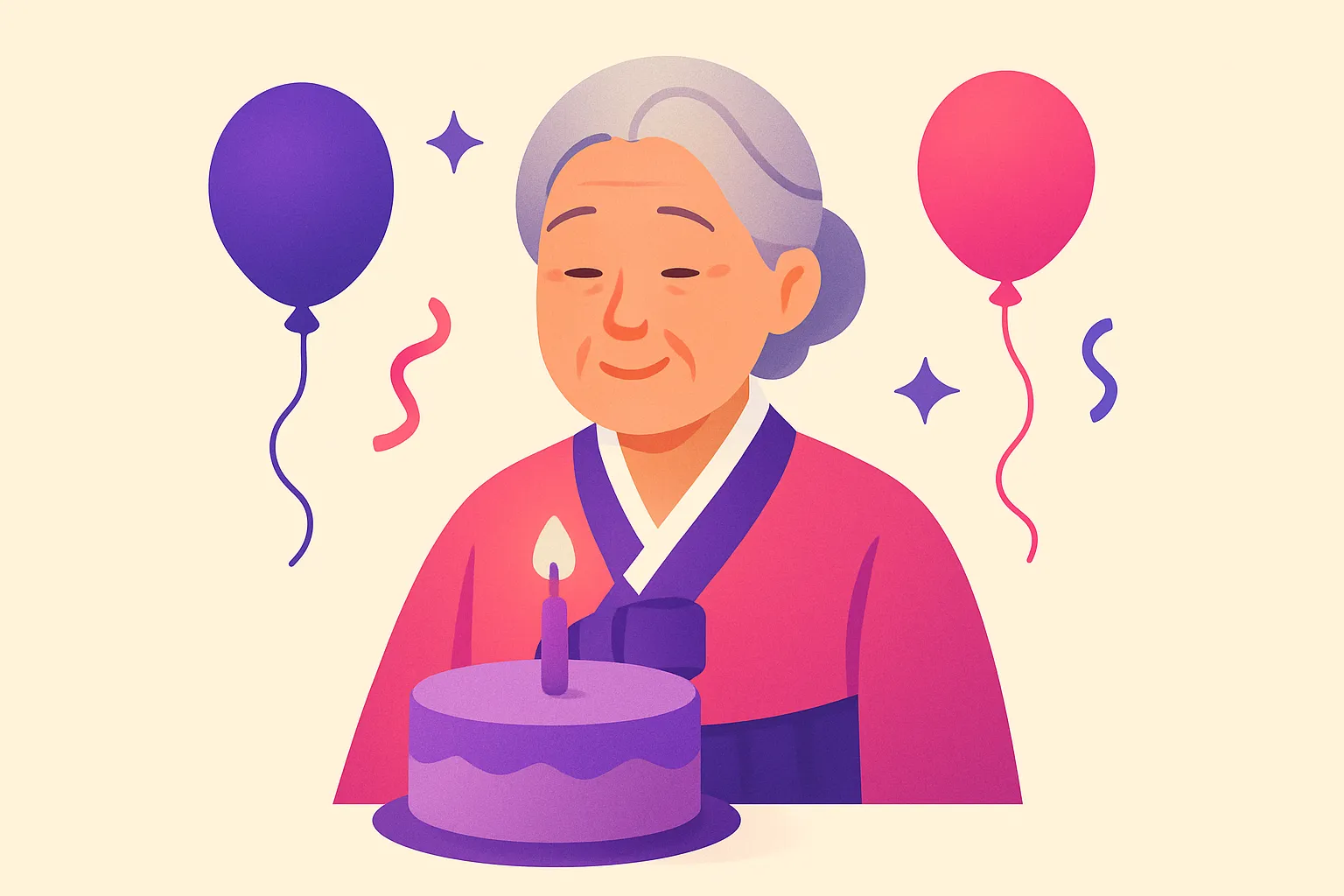
In South Korea, the 60th birthday—called Hwangap—is a profound milestone celebrated with elaborate family gatherings, symbolic rituals, and meaningful gifts to honor a person’s long life and their passage into a new life cycle. Traditionally, this celebration marks both respect for elders and the completion of the lunar calendar’s zodiac cycle, making it one of the most important birthdays in Korean culture.
Why the 60th Birthday Is So Important in South Korea
The Korean 60th birthday, or Hwangap (환갑), holds special significance because it represents the completion of five full cycles of the 12-year lunar zodiac—totaling 60 years. In traditional society, reaching 60 was rare and seen as achieving a full life, so families would gather from near and far to celebrate. Today, it’s still deeply respected, even as people live longer and other milestone birthdays like the 70th (Chilsoon) have grown in prominence.
Key meanings of Hwangap:
- Marks a "rebirth"—a symbolic return to the zodiac year of one’s birth.
- Honors longevity, resilience, and the wisdom of elders.
- Strengthens family bonds across generations.
- Offers gratitude and respect from children and grandchildren.
The Traditional Hwangap Ceremony: Step-by-Step
Hwangap celebrations can range from intimate family gatherings to large banquets. Here’s how a classic ceremony unfolds:
- Family Reunion: Relatives from all over gather to honor the birthday person. In rural Korea, it was common for entire villages to join.
- Ancestral Rites (Jesasang): Some families begin with a simple ancestral memorial, expressing gratitude for the elders’ lineage.
- Birthday Table (Sang): A grand table is set with colorful, symbolic foods. Special attention is paid to rice cakes (tteok), fruits, and seaweed soup (miyeok-guk).
- Formal Bow (Jeol): Children and grandchildren bow deeply to show respect and offer birthday greetings, often with heartfelt words or poems.
- Gift Presentation: The honoree receives gifts—often money ("saebae don"), hanbok (traditional dress), or meaningful keepsakes.
- Feasting and Toasts: The celebration continues with laughter, toasts, and song. Elders offer words of wisdom and thanks.
Symbolic Foods and What They Mean
Food is central to Korean birthday traditions. At a 60th birthday, certain dishes carry deep meaning:
- White Tteok (Rice Cake): Symbolizes purity, new beginnings, and good luck for the next life stage.
- Miyeok-guk (Seaweed Soup): Traditionally eaten on birthdays for health and longevity; also given to mothers after childbirth.
- Fruit Pyramid: Apples, pears, and jujubes are stacked in a pyramid, representing abundance and family prosperity.
- Meat and Fish: Grilled beef, pork, and fish dishes reflect wishes for continued strength and vitality.
- Korean Sweets (Hangwa): Brightly colored, these rice-based treats symbolize joy and celebration.
Many families today blend tradition with modern tastes—adding Western cakes or favorite foods of the birthday person.
Modern Hwangap: How 60th Birthdays Are Celebrated Today
While the core meanings remain, modern South Korean families often adapt Hwangap traditions to suit busy lifestyles and changing preferences. Here’s how:
- Venue Choices: Celebrations range from home-cooked family meals to fancy hotel banquets or even destination trips.
- Guest List: Some keep it small (immediate family), while others invite extended family, friends, and community members.
- Dress: The honoree may wear hanbok, a suit, or elegant contemporary attire—depending on their style.
- Gifts: Beyond cash and traditional items, families now give travel vouchers, health products, or even personalized photo albums.
- Activities: Speeches, video tributes, and memory books are popular. Some use online tools like the Birthday Wish Generator to craft heartfelt messages.
It’s common for the honoree to give back—treating family to a meal or making a charitable donation, reflecting humility and gratitude.
What to Say and How to Give Birthday Wishes
Words matter deeply in Korean culture. Here’s how to express your best wishes at a 60th birthday:
- Standard Greeting: "Saengil chukha hamnida" (생일 축하합니다) – "Happy Birthday!"
- Formal Respect: "Hwangap chukhahaeyo" (환갑 축하해요) – "Congratulations on your 60th birthday."
- Sample Toast: "May your days ahead be filled with health, happiness, and family love."
- Written Card: Include a note of gratitude for wisdom shared and memories made.
- With Gifts: Hand your gift (both hands) and bow slightly—showing respect.
For personalized wishes, try the Birthday Wish Generator for unique messages in English or Korean.
Five Essential Do’s and Don’ts for a Korean 60th Birthday
- Do consult with the family about traditions they value—each family may differ.
- Don’t give clocks or shoes as gifts—these can symbolize bad luck in Korean culture.
- Do offer your gift and greetings with both hands as a sign of respect.
- Don’t wear all black or white; opt for festive, respectful attire.
- Do participate in group photos and share memories—it’s part of the joy!
Comparing Hwangap to Other Milestone Birthdays in Korea
While Hwangap is unique, Korea honors several milestone birthdays:
- Dol (1st Birthday): Extravagant celebration with a fortune-telling ritual.
- Hwangap (60th): Completion of the zodiac cycle; traditional rebirth.
- Chilsoon (70th): Gaining popularity as lifespans increase.
- Palsun (80th): Deep respect for longevity.
Each has its own customs, but none are quite as rich in symbolism as the 60th. To track upcoming milestone birthdays in your family, use the age calculator or set up a birthday countdown for the big day.
Frequently Asked Questions About Korean 60th Birthday Traditions
What do you wear to a Hwangap celebration?
Traditionally, the honoree might wear a hanbok (colorful Korean dress), but today, people often choose formal Western attire or smart-casual outfits. Guests should dress respectfully—bright, festive clothing is encouraged, while plain black or white should be avoided unless specified.
Are there specific gifts to give (or avoid) for a 60th birthday in Korea?
Cash in a decorative envelope is always welcome. Other thoughtful gifts include health supplements, fine foods, or personalized keepsakes. Avoid clocks and shoes, which are considered inauspicious. If in doubt, ask the family or opt for a heartfelt card using the Birthday Wish Generator.
Can non-Koreans participate in Hwangap traditions?
Absolutely! Participation is a sign of respect and friendship. If you’re invited, take part in the bowing, sharing food, and group activities. Asking questions and showing genuine interest in the customs will be appreciated.
How do families blend traditional and modern elements?
Many families now mix old and new—honoring core rituals (like bowing and symbolic foods) while embracing contemporary venues, digital invitations, or even virtual photo albums. Some host overseas gatherings or organize family trips. For more cultural guides, visit the Birthday Hunter guides hub. And if you’re looking for birthday deals, check the Birthday Hunter app (https://birthdayhunter.com) for free birthday freebies—just not food deals!
Get actual free stuff on your birthday
Birthday Hunter finds free birthday food, drinks and deals near you — and rewards you for claiming them.
Get Birthday Hunter — freeRelated guides
Creative Long-Distance Birthday Celebration Ideas That Make Your Mom Feel Special
7 min read
CultureThe Origin and Meaning of Birthday Superstitions: Why Some Cultures Avoid Celebrating on Friday the 13th
5 min read
Party IdeasHow to Celebrate a Long-Distance Birthday for Your Best Friend: 7 Creative Ideas That Bridge the Miles
7 min read